Unsettling Flesh / Dissecting the Gaze. On the Simultaneity of the Contemporary
The present happens without us being able to stop
it - all that remains and that is constant are images.
We are confronted with the ever-changing images,
moving or statistical, human or android, digital or
analog, which affect us visually and whose power of
effect hardly anyone can escape, since they structure our
everyday modes of perception. At the beginning of the
development of this Western present was the emergence
of transport infrastructures that detached time from
its cosmological order and organized it capitalistically
by linking it to space (the movement from a start to
a destination). Instead of the planets determining
time, the desire for productivity and profit now guided
time and placed it under their service. To recount this
seems anachronous and simplistic in light of what
seems today to be the degenerate state of this history:
everything simultaneously and always everywhere.
Time and space dissolve completely. Our conditions of
existence are constantly in radically differently weighted
relationships, the worlds of feeling ambiguous. Living
in the simultaneity of temporal and spatial axes, in
an image overload, our attention economies are in a
state of permanent overload. In their works, artists
Minda Andrén and Dominika Bednarsky confront this
constantly complicating world by critically situating our
material reality.
Where can places of retreat from this overturning
present lie? Nature no longer forms a place of retreat.
In this consequence, the body appears as the ultimate
mystery that can never be fully understood, contrary
to all attempts at taxonomization. We are not only
permanently surrounded by images, reflections,
disciplining of the body, but also - and precisely because
of this - permanently thrown back on our own body.
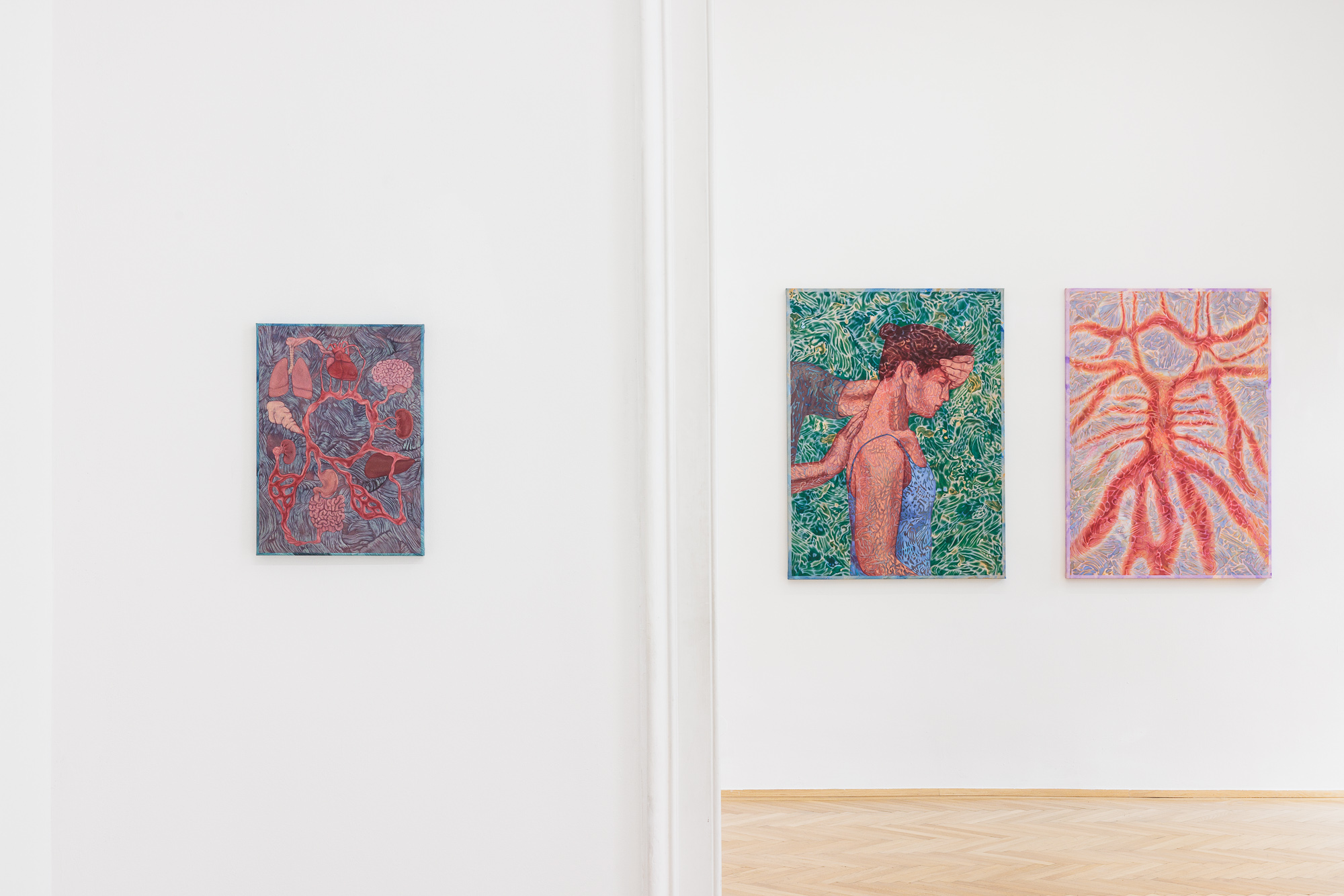
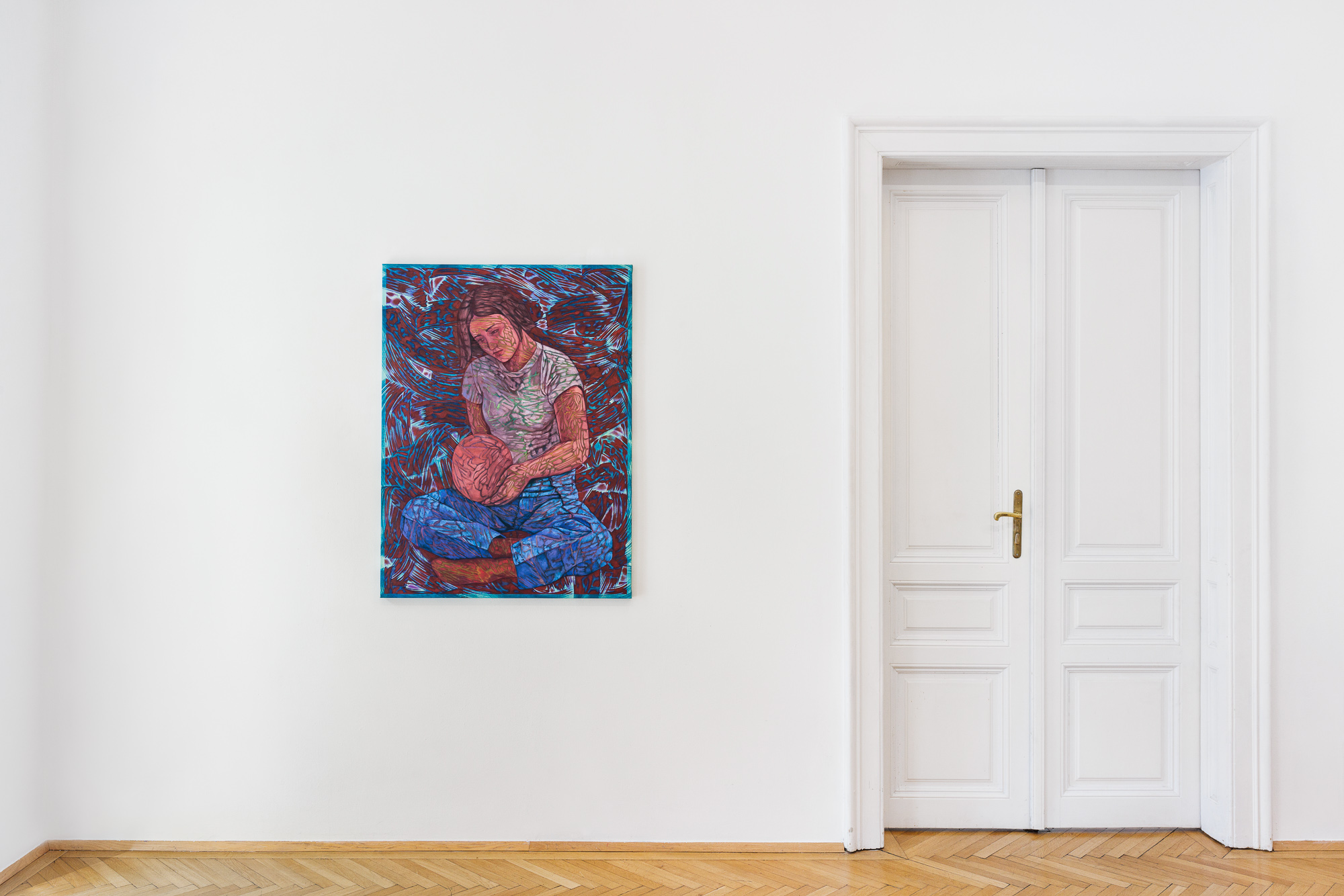
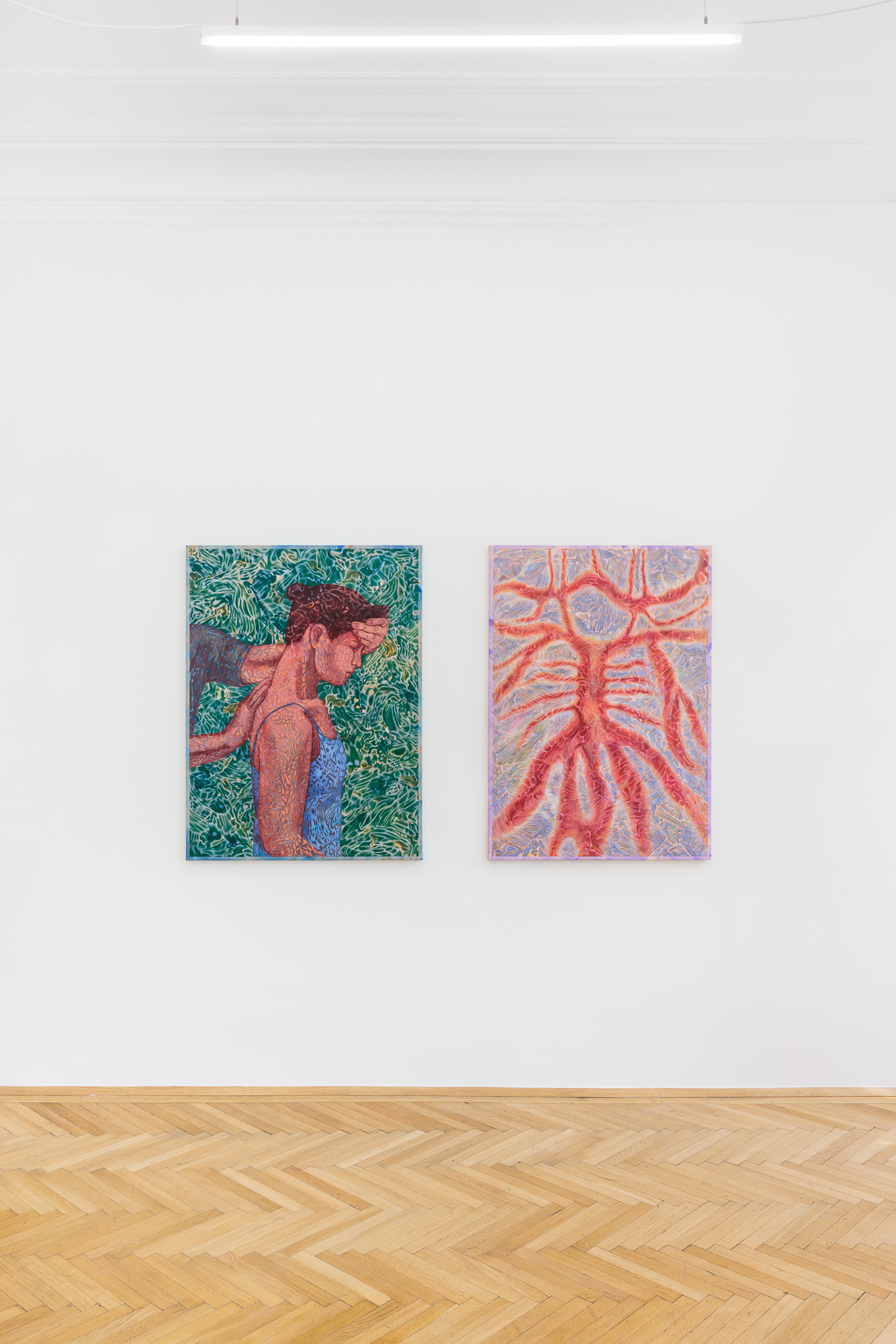
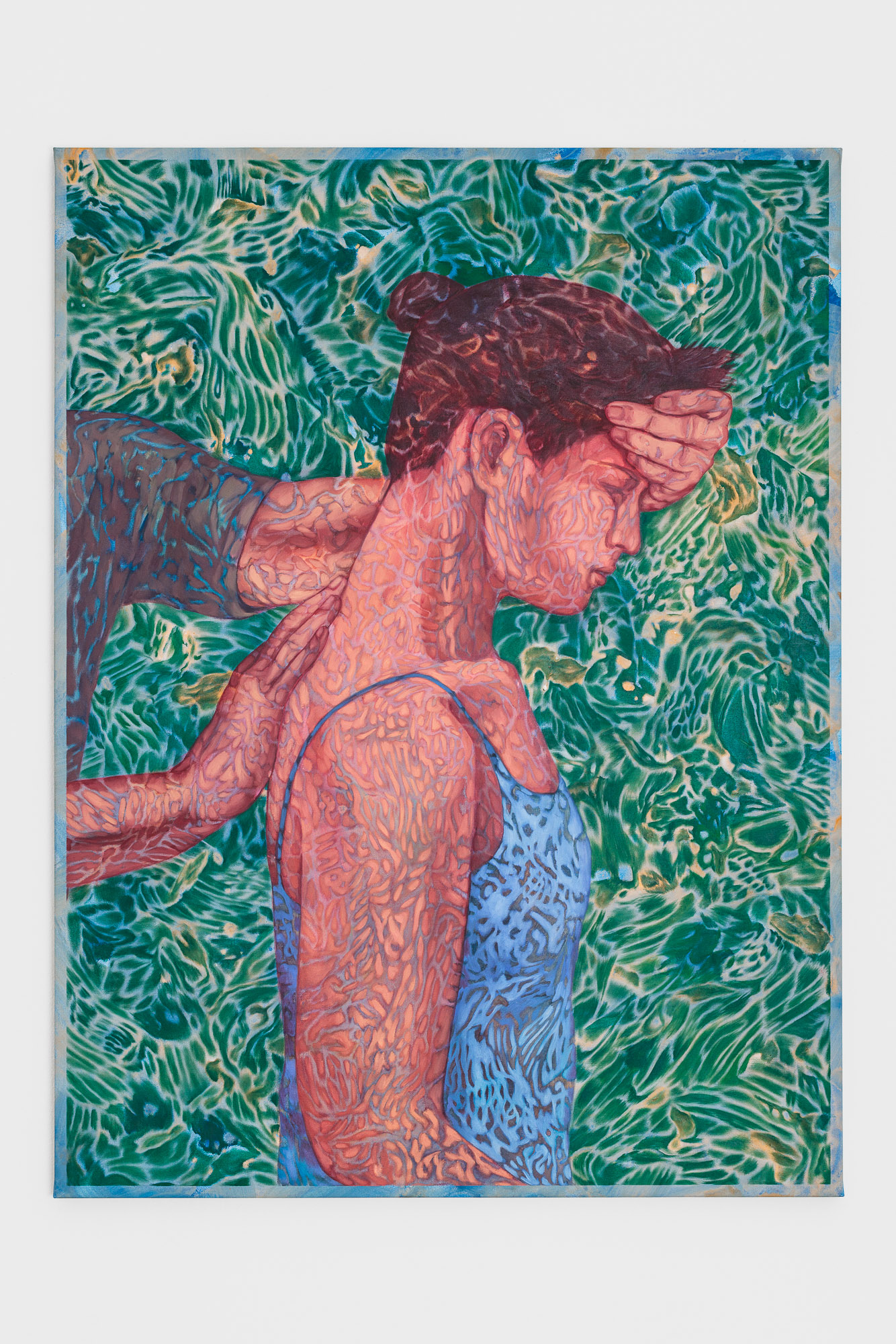
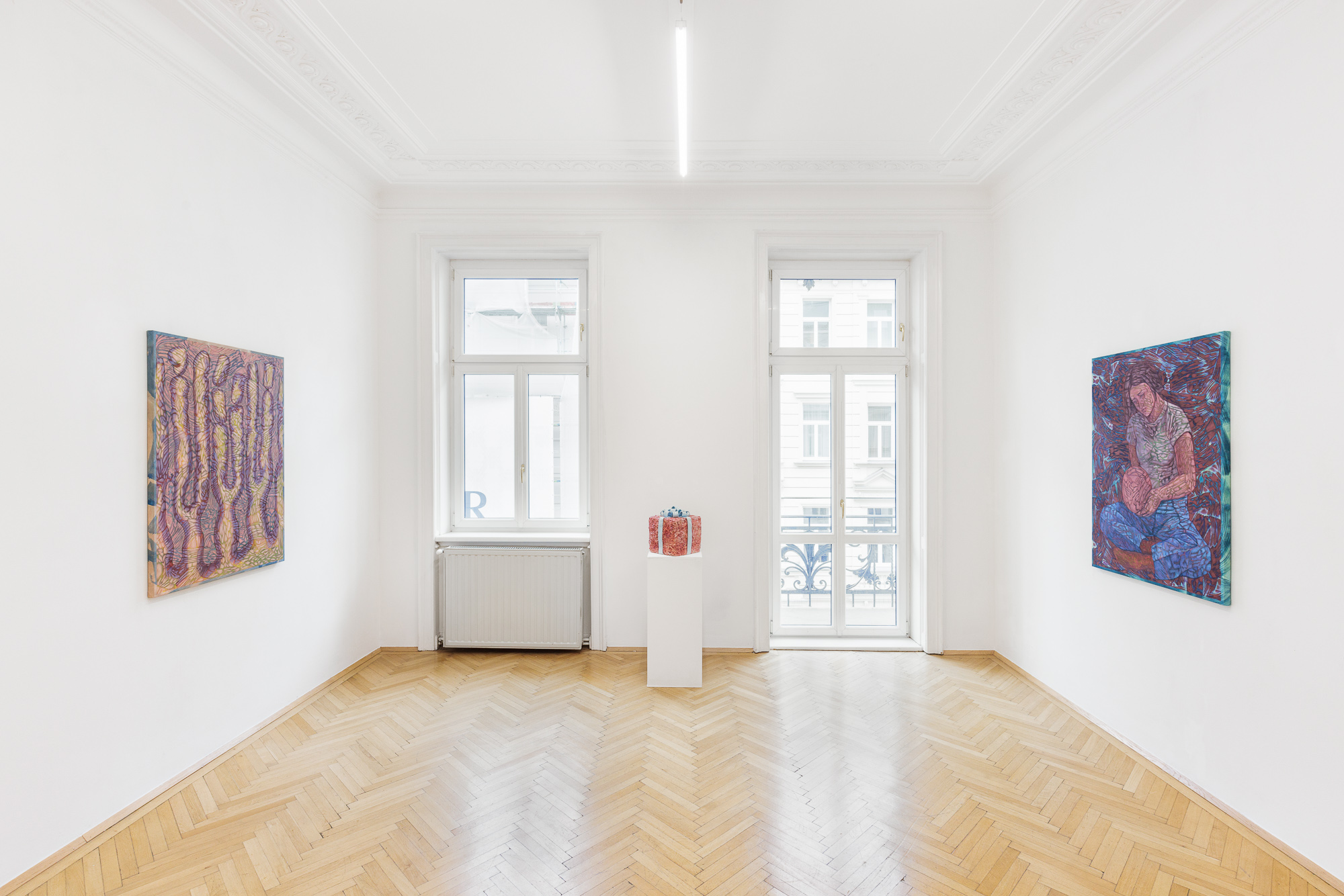
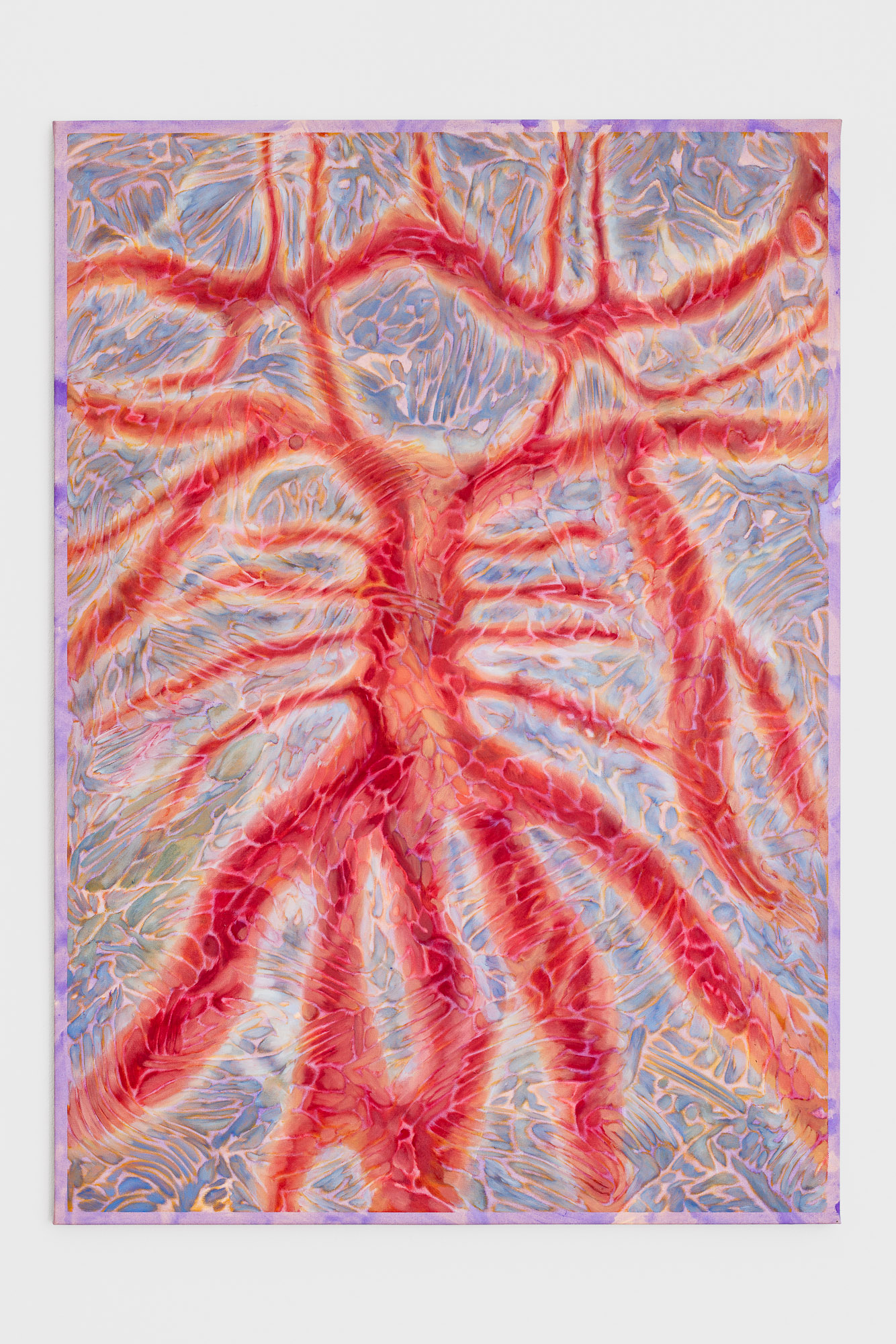
Minda Andrén’s paintings offer a projection or reflection
surface for this paradoxical overload. Layer by layer, she
encounters images of corporeality in her painting - that
of the artist encountering the canvas, and at the same
time with the cultural-historical facets of the topos
body. At the edges of the canvases, the surface of the
first layer flashes through; a rough painterly gesture
arranges the first color surface of the canvas. Starting
from this structure, Andrén develops her body paintings.
She draws the motifs from a wide variety of sources. The
branching structure on the canvas, an abstract system
of fibers, or almost a cortex?, become the materiality
of painting made flesh and dissects the motifs lying on
it. By singularizing the motifs and integrating them,
they return to the body of painting. The simultaneous
existence of the layers and their formal-aesthetic
incorporation of arbitrary images dissect the viewer’s
gaze, but also allow a dissecting gaze through the
disclosure of the layers.
The motifs of Dominika Bednarsky ceramics borrow
from everyday culture. They achieve their absurdity
through the central subject that is part of each sculpture:
minced meat. The yellow horse has a mane made of
minced meat, the hen is covered with eggs made of
minced meat, the cake is not a cream cake but a minced
meat cake. The ceramics obviously cite the German
phenomenon of Mettfiguren. Forming large figures out
of meat is only conditionally a sign of humor, but rather
of excessive consumption, if not medieval gluttony. Not
entirely unironically, however, Bednarsky combines cute
motifs (little mice, bows, little birds) with the easily
perishable food. Being cute or cuteness, as an aesthetic
feeling and object description of the contemporary,
always stand in an ambiguous relationship. That which
is cute attracts and appears to be positive in the first
instance; however, something is cute only because it
appears powerless or impotent to the judging subject.
Cuteness is likewise a leading commodity aesthetic;
as an aesthetic feeling, it is closely associated with
convenient consumption. Bednarsky’s ceramics open
up the space for the named ambiguous feelings to
take place simultaneously, overlapping and denying an
absolute aesthetic judgment. 1 The glossy and ultra-
precise surfaces draw the eye, the incorporation of
the sculpted mincemeat repels. They hurl the viewing
subject into a constantly actualizing situation with no
clear end. In this way, Bednarsky plays with the viewer’s
voyeuristic desire by defamiliarizing familiar motifs that
belong to collective social memory and are overlooked
in shop windows. It only becomes clear how ambiguous
contemporary aesthetic feelings can be.
Rather than a way out, or a redemptive response, both
positions offer a mirror to the visual complexity of the
present. Their materialities and fleshy surfaces have a
disquieting effect; they reorganize modes of perception
by appropriating them and shattering them again. In this
way, Andrén and Bednarsky’s works create a visual in-
between space that stands apart from the present, yet can
only take place with and within it. Artistic practice does
not seem to be a way out, but certainly a brake on the
present taking place in and with constant simultaneity
- despite unclear aesthetic feelings, it situates us in the
here and now, encloses time and space in its dimensions
for a moment, and ultimately throws us back on ourselves
again and again.
Photo Credits: Simon Veres